CSSA President Al-Rehani’s report to the CSU Board of Trustees
November 18, 2025
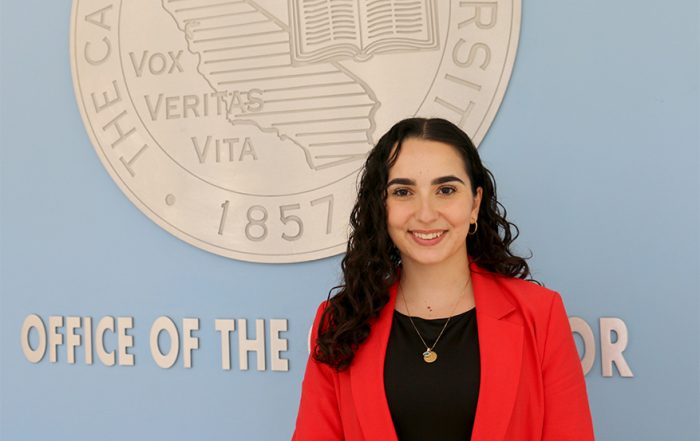
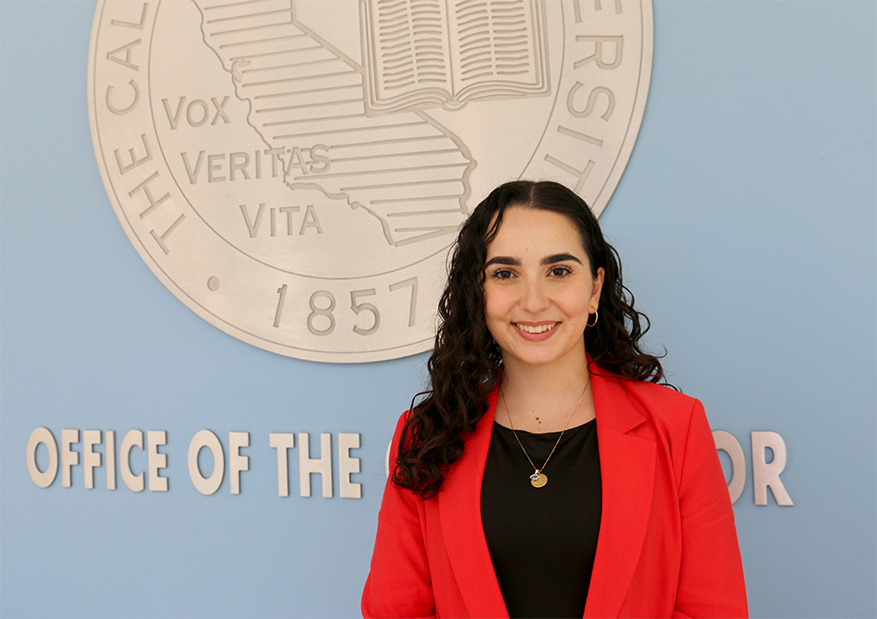
Thank you, Chair Clark, and good afternoon Trustees, Chancellor Garcia, University Presidents, and everyone here today. My name is Tara Al-Rehani and I serve as the President of the Cal State Student Association.
CSSA represents nearly half a million students in the CSU and serves as the official voice of CSU students to the California State Legislature and the CSU Board of Trustees. It is an honor to provide this report on their behalf.
This is my third Board of Trustees meeting serving as CSSA president but as we close out 2025, I am in deep reflection over the safety and security of our CSU community. The political landscape has only continued to challenge us as the year goes on, but the CSU persists. The increasing aggression against higher education institutions for upholding equitable practices, the presence of immigration enforcement and the racially targeted attacks in our communities, remains a threat to the stability and assurance of our students and their families. There is an overwhelming sense of fear, uncertainty, and confusion. However, we are confident that the CSU will continue to do what they can to preserve the greater system and protect against future aggressions. And quite frankly, we must. Still, politics is only one aspect of what defines this moment for our system.
We are reminded of our shared humanity as we mourn the recent loss of members of our CSU community. We send our condolences to the families of Lauren Turner and Destiny Morris, two highly dedicated student athletes at CSU Fullerton who lost their lives this month. Their passing is a reminder to care for one another, to lead with empathy, to be patient, to offer grace in difficult moments, and to create a campus environment where every student feels seen, supported, and valued. In honoring their memory, let us take a moment to recommit ourselves to fostering kindness and compassion throughout the CSU community. This system is strong, and we will endure.
Carrying that compassion with us, we turn to the important conversations that lie ahead.
The strategic enrollment management plan will be discussed tomorrow. I’d like to highlight that as this plan begins to roll out in conjunction with the Student Success Framework and CSU Forward, the center of all of this is our students. Whether they are traditional or non-traditional, we must remember that this work is intended to remove barriers and uplift those coming to our system, from a variety of backgrounds. Our organization knows the commitments being made are a tall ask, and we are grateful, but more importantly, we are also committed to helping this process along, every step of the way.
This plan expands what the student life cycle looks like and discusses equity, access, modernization, and program flexibility. Its importance can not be understated. That being said, increased enrollment substantially helps our universities, and we should acknowledge that investments in vital student services are what will ensure stability in the long term. With the proper strategic considerations, caution, and allocation of funding, our system should be able to both expand on, and preserve what exists. We must be mindful of every step taken to not disrupt the progress and pathways of currently enrolled students. It will be a delicate balance, but entirely possible.
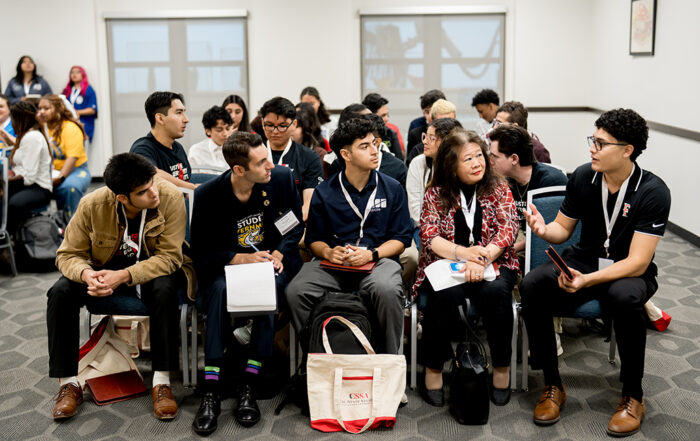
Since the last time this board was convened, CSSA has hosted three plenary meetings. We passed both our policy agenda, and the foundation for our White Paper on Artificial Intelligence.
Our Policy Agenda outlines four priorities:
- Address the Total Cost of Attendance for CSU Students. Affordability is a cornerstone of the CSU’s mission, and it aims to provide high-quality education to Californians from all backgrounds. Our efforts to maintain affordability will continue to focus on advocating for, and expanding financial aid options, exploring cost-reduction strategies, sustainable transit solutions, and other means of lowering the overall cost for our students. As the student success framework highlights, we must recognize that easy and streamlined access to affordable housing, food pantries, and technology services are integral to a student’s academic success.
- Ensure Students Have Access to High-Quality Wellness and Mental Health Support Services. Providing and promoting timely, and accessible mental health resources is becoming more attainable than ever. As AI tools continue to advance, our hope is that it will allow our staff to cut down on time-consuming administrative tasks to better focus on the students and the rest of our campus community who come forward seeking support. Advocating for the creation and implementation of 24/7 telehealth services continues to be a priority for our organization. But physical health is just as important as mental health. We continue to discuss how we can expand programs promoting holistic wellness, including fitness, nutrition, and stress management, to create a balanced support system for students.
- Ensure the Academic Success and Holistic Educational Experience of All CSU Students. To my earlier point, our students, our universities, our cities, and our system are being targeted. But we need to continue to show up, as one unit, to protect and affirm our students, their families, identities, and communities. We will not ignore the political climate and focus only on academic and career success; we can’t. It is both/and. By working together to enhance safety protocols, Know Your Rights campaigns, and services alike, we honor our promise to protect our students, while helping them advance their own lives. That’s why they choose the CSU.
- Foster Inclusive Engagement for Students to Find Agency in the CSU Community. More specifically, the continued equal partnership and inclusive co-creation between students and the larger system is what empowers students to see themselves not just as participants, but as co-architects of the CSU experience, strengthening trust, belonging, and collective progress across the system. This approach ensures students have a real voice and shared responsibility in building a stronger, more inclusive CSU.
As noted, CSSA also passed the guiding principles for our AI White Paper, titled Improving the Implementation of the CSU Artificial Intelligence Initiative for Students. Developed through the systemwide affairs committee and authored by VP of Systemwide Affairs Karroum. With input from all twenty-three Associated Student Organizations, the paper provides a student-driven evaluation of the CSU’s partnership with OpenAI and the launch of ChatGPT Edu across the system.
At its core, the White Paper emphasizes that equity is as important as access. While we progress toward digital modernization, students have reported inconsistent implementation, limited awareness, and insufficient training that has resulted in varied use across campuses. We look forward to the opportunity to aid our faculty in the establishment of clear, transparent policies to ensure consistent classroom practices around AI use.
Students have also raised concerns regarding academic integrity in the classroom. Citing the lack of unified guidance on ethical use and the growing reliance on unreliable AI-detection tools that have led to false accusations and damaged trust.
Additional recommendations highlighted the ethical and psychological dimensions of AI use. We encourage the CSU to continue to prioritize student well-being, data privacy, and critical-thinking education as AI becomes more deeply integrated into learning environments. The paper concludes by reaffirming that innovation must be accompanied by accountability, transparency, and inclusion. Students across the CSU have made it clear: this technology should enhance, not replace, human connection, integrity, and shared governance. We will be sharing the final draft in the coming weeks.
While the changing political landscape has devastated many of our communities this past year, CSSA has remained resolved in advancing student-centered priorities in basic needs, campus climate and safety, and affordability. I’m pleased to report that two CSSA co‑sponsored bills, SB 271 (Reyes) and SB 98 (Pérez), were signed into law. SB 271 expands support for student parents by integrating childcare services and resources into core basic needs infrastructure across public higher education, while SB 98 establishes clear, timely campus notification protocols when immigration enforcement is present, strengthening safety and trust for immigrant and mixed‑status communities. These victories reflect sustained student advocacy and partnership with legislative leaders, CSU stakeholders, and community allies. Collective action matters and CSSA is willing and able to partner in these efforts to both uplift and preserve our system.
Yesterday, CSSA Chair Aaron Villarreal testified at the Assembly Higher Education Committee’s hearing on ‘The Future of Higher Education and the Role of the Federal Government’ alongside other CSU stakeholders. He emphasized the need to protect access, affordability, and inclusion amid federal actions threatening financial aid, DEI programs, and food assistance, while also noting that uncertainty at the federal level and potential funding reductions place added strain on the CSU’s budget. Chair Villarreal underscored that although California cannot control federal policy, the state must lead in safeguarding funding stability and ensuring every student’s right to learn, feel welcome, and thrive.
Looking forward, CSSA is preparing for when the State Legislature reconvenes in January. We continue to be focused on advancing priorities around student affordability, basic needs, financial aid reform, and stable CSU funding. CSSA is also strengthening our budget advocacy strategy to ensure that students’ voices remain central in state budget deliberations and policy discussions. Through coordinated engagement with campus representatives, system partners, and state leaders, we will continue to champion the needs of all CSU students in the year ahead. It is no secret that the partnership between CSSA and the CSU has led to historic wins in just this last legislative cycle. After seeing what we were able to achieve together, we are excited to build on this momentum and deliver our best on our shared priorities, centering students.
Before I conclude, I want to re-emphasize that these few months have challenged this system and its students in unprecedented ways, and we don’t know if future months will be any easier. But the way out is together. I urge you all to connect with your student leaders, talk to them, share with them, and inform them. We have seen time and time again that when we operate as one unit, we succeed.
Chair Clark, thank you and this concludes my report.