CSSA President Al-Rehani’s report to the CSU Board of Trustees
March 10, 2026
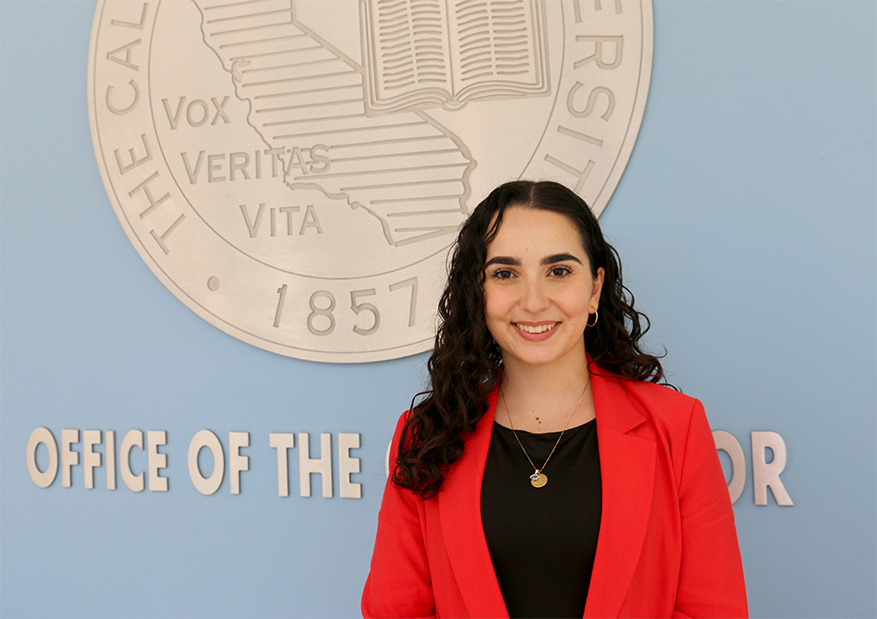
Thank you Chair Clarke, and good afternoon Trustees, Chancellor Garcia, University Presidents, and colleagues. My name is Tara Al-Rehani, and I serve as President of the Cal State Student Association (CSSA), representing nearly half a million CSU students. It is an honor to provide this report on their behalf today.
Before I delve into the rest of my report and other CSSA updates, I would like to acknowledge and extend our appreciation of the Chancellor’s and Chair Boyd’s earlier comments regarding the CSU’s lawsuit against OCR (U.S. Department of Education’s Office for Civil Rights). Let me be clear, CSSA has always stood and will continue to stand with our transgender students. We will continue to advocate for protecting and defending the rights of all of our students, regardless of gender identity, sexual orientation, race, ethnicity, or any other protected class. The physical safety and well-being of transgender students on our campuses cannot be forgotten. This federal administration has consistently sought to attack and harm our CSU student communities and families in ways that impact us culturally and academically. It cannot go unchecked any longer. I want to put it plainly that if our trans students cannot safely go to class, participate in their extracurriculars, or exist openly on our campuses, academic well-being is nowhere on the table. We cannot talk about retention, graduation rates, or student success while students are calculating their safety in every room they enter. Safety is the prerequisite. Dignity is the baseline. And, it is our responsibility to guarantee both. CSSA appreciates and echoes the CSU’s action and response against these unlawful allegations and suppression tactics.
Since my last report to this body, I am happy to share that CSSA has submitted three Student Trustee nominees to the Governor’s Office this year! Each individual represents the excellence, diversity, and leadership that define the CSU student body. While we go through this process, we want to thank Trustee Guajardo for her deep commitment, dedication and service to our CSU students as she culminates her term. Thank you, Jazmin!
CSSA has also convened its February Plenary meeting where we approved a handful of bill positions. But, our plenary was also about aligning our values, our voice, and our advocacy because we understand that momentum matters, and right now, students across the CSU are building it.
This year’s legislative package so far includes measures to expand access to on-campus employment for undocumented students, streamline student eligibility for CalFresh to combat food insecurity, clarify and modernize the California Dream Act Application to reduce financial aid errors, and strengthen campus protections against technology-facilitated sexual violence, including AI-generated abuse. Collectively, these proposals focus on removing structural barriers that prevent students from accessing employment, food assistance, financial aid, and safe learning environments. A full list of legislation we have taken a position on can be found on the CSSA website under the “Advocacy” tab. Also, please note that we are still currently reviewing several bill proposals aimed at improving student affordability, access to resources, campus safety, and equity across the CSU system.
In addition to SB 323 authored by Senator Pérez, titled “Student Aid Commission: California Dream Act application,” which I talked about in my last report, CSSA is also co-sponsoring AB 2251 authored by Assemblymember Rodriguez, titled “Student financial aid: Cal Grant Program: cost of attendance.” This is a measure that would require Cal Grant-participating institutions to clearly publish how they calculate Cost of Attendance budgets and implement a standardized, accessible adjustment process. This is one of our five approved bills for this legislative packet, and it ensures students can request adjustments in any budget category, receive decisions within 30 business days, submit documentation electronically, and obtain a second review if denied. By increasing transparency and formalizing the adjustment process, AB 2251 will help prevent students from hitting artificial financial aid caps when their real living costs exceed standard estimates, directly protecting affordability and access to aid.
Taken together, these proposals align with CSSA’s broader advocacy priorities: protecting affordability, strengthening basic needs access, improving financial aid transparency, expanding equitable employment opportunities, and ensuring student safety in evolving digital environments.
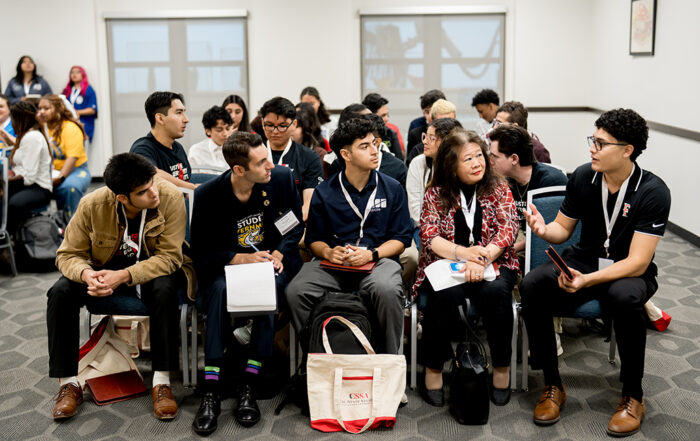
In less than two weeks, CSSA will be hosting the 31st annual California Higher Education Student Summit (CHESS), a statewide conference in Sacramento that equips CSU student leaders with training on public policy, state governance, and effective advocacy. During the two-day event, students will prepare for Advocacy Day at the Capitol on Monday, where we will meet directly with legislators and staff to advance our sponsored and supported legislation. In addition to supporting priority bills, students will advocate for the 2026-27 CSU budget, and urge lawmakers to fully fund compact commitments without further deferrals, protect affordability by reducing reliance on tuition increases, and increase ongoing investments in financial aid and basic needs. I want to be clear that our students are not simply reacting to policy. We are shaping it because we must go beyond just naming these issues, and when students serve as co-creators to the solutions of these challenges, we are all stronger for it.
As the landscape at both the state and federal levels continues to shift, CSSA is also evaluating how we could strengthen our infrastructure so that student voices are not episodic, but sustained, strategic, and influential, especially at the federal level.
I’m honored to have recently had the opportunity to participate in Advocacy Day alongside Chancellor Garcia and our other CSU partners, and I want to reflect briefly on what that experience reinforced. When students, staff, alumni, faculty, and administration stand side by side, it sends a clear message that our priorities are aligned, our goals are shared, and our commitment to California’s future is unwavering. Legislators notice when the CSU speaks with one voice. They respond to alignment, to clarity, and to a united front grounded in student need. And the issues we champion (affordability, employment access, food security, mental health, etc.) do not impact students in isolation. They shape the strength of our campuses, our workforce pipeline, and the communities we serve. I want to reiterate that centering students ultimately strengthens the entire CSU.
As will be discussed later, basic needs and housing security are deeply interconnected. As you may recall, CSSA released an Affordable Housing White Paper grounded in student experiences and focused on a simple principle: housing must be truly affordable and reflective of students’ real financial circumstances. While important investments have been made, gaps remain, particularly in transparency and consistency, and too many students still assume housing is out of reach.
Still, I want to recognize the intentional, student-centered work happening across our universities to address this issue. The coordination between housing, basic needs, and student affairs teams reflects a real commitment to student stability and success. And, we know this work is happening amid significant budgetary constraints. Advancing housing solutions while resources are stretched is not easy, and that leadership does not go unnoticed. At the same time, those constraints directly affect students’ well-being, which is why sustained investment in basic needs remains critical.
For many students, the CSU represents stability and opportunity. They come here because of our commitment to affordability and access. Housing is central to that promise. And if we want to remain the institution students turn to for upward mobility, our housing systems must continue to reflect that identity.
In January, I spoke about the vital need to expand mental health access across our system, and that need has not changed. As we hear the presentation on basic needs and student wellness, we must treat 24/7 and after-hours mental health access as foundational infrastructure, not an optional enhancement. It is as essential as housing, food security, and financial aid. When one basic need destabilizes, the others follow.
There have been thoughtful conversations about implementation, coordination, and quality. Those conversations matter. But while we deliberate, students are still facing long wait times, limited after-hours options, and confusion about where to turn. The need is clear. The data is clear. The student testimony is clear. At some point, continued discussion becomes delay. We must move from conversation to action, and we must do it together.
And before I close, I want to acknowledge that several of our campuses have recently experienced incidents that have shaken our communities. Safety is not just about response protocols, it is about whether students feel secure enough to learn, to sleep, and to belong. When disruptions occur, their impact lingers. Physical safety, emotional stability, and mental health are inseparable. If we are serious about student success, we must be serious about all three.
That is why our conversations around mental health access, after-hours support, and basic needs are not theoretical. They are directly connected to how students process and recover from the realities around them. Ensuring that students know where to turn, at any hour, is part of how we build, not only responsive campuses but resilient ones. When we strengthen student wellness infrastructure, we strengthen campus safety culture as a whole.
I’ve said this before but I’ll say it again, we are facing unprecedented times and we need unity to persevere. None of this will be easy. It has not been easy. It’s affected each of us personally and professionally. But if we can come together as a system and engage in honest dialogue, balance competing needs, and act with shared resolve, we can deliver on our collective responsibility to ensure our students leave the CSU not only with a degree, but with a transformative experience and a lasting sense of pride for what they were able to accomplish.
Chair Clarke, thank you. This concludes my report and I’m happy to answer any questions!