CSSA President Al-Rehani’s report to the CSU Board of Trustees
January 27, 2026
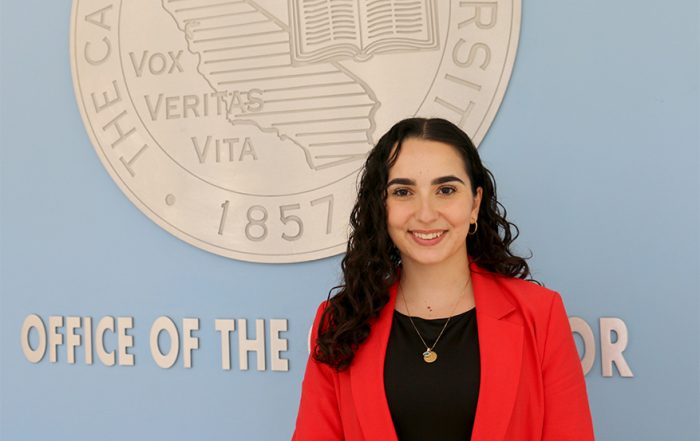
Thank you, Chair Clark, and good afternoon Trustees, Chancellor Garcia, University Presidents, and everyone here today. My name is Tara Al-Rehani and I serve as the President of the Cal State Student Association.
CSSA represents nearly half a million students in the CSU and serves as the official voice of CSU students to the California State Legislature and the CSU Board of Trustees. It is an honor and a privilege to provide this report on their behalf.
Happy New Year! Reflecting on how we wrapped things up last year, there’s a lot of ambition and desire to do great things. Between the Strategic Enrollment Management Plan, the Student Success Framework, and upcoming budget advocacy, we must rely on our collective partnership across the system and government to achieve our goals. As I’ve said in previous reports about partnership, the decisions being made require consensus from all CSU stakeholders and so I implore everyone to consider what our students need when making these decisions. We have asked faculty, staff, and administration to stretch, flex, and adjust, because we need more for our students. They deserve more. WE deserve more.
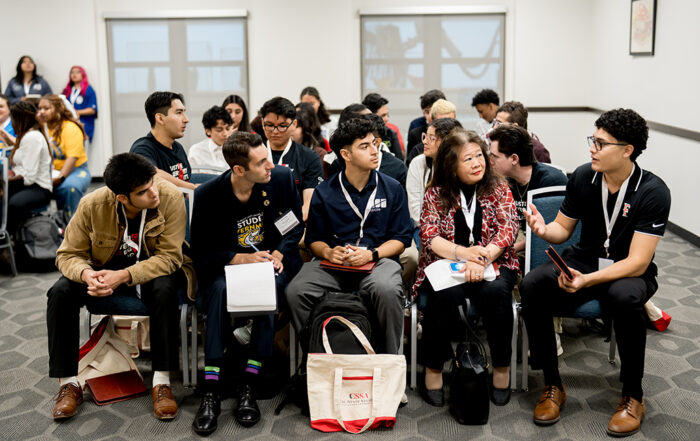
Starting off the new year strong, CSSA has convened our first plenary of the spring semester at Sonoma State. We followed up on some top items from our policy agenda including, 24/7 tele-mental-health services, equitable cost of attendance for different types of students, spring advocacy efforts, and more. A special thank you to Assistant Vice Chancellor Strategic Enrollment Management April Grommo, Deputy Vice Chancellor of Strategic Enrollment Management and Student Success Dilcie Perez, Vice Chancellor of External Relations and Communications Greg Saks, and Assistant Vice Chancellor of Budget Planning and Advocacy Mark Martin for coming to our meeting to discuss the CSU frameworks and upcoming advocacy with our students.
I’d first like to take a moment and share with you some eye-opening highlights from our regional discussions around tele-mental-health. Generally, our student leaders reported that their student bodies experience limited access, long wait times before they can see a practitioner, and staffing shortages when it comes to accessing these psychological services.
The availability of after-hours, non-crisis care is even more limited and; a handful of students also stated that they feel confused about whom, when, and where they should go when they need support.
Let me say that again, our students are confused about whom, when and where they should go when they need support.
Now, the second half of these conversations focused on how tele-mental-health could be seen as a supplement to help alleviate some of the immense pressures our CAPS centers are feeling, especially during high-stress periods like finals. And how not only would students be able to access the support they need on their own terms, but they might even have more intentional and personal time with our CAPS counselors too. It was also noted that in-person, on-campus care cannot be replaced and is something some students prefer using. That being said, we think the solution is both/and. Not one or another.
I bring these perspectives to you all to emphasize that there is a deep desire amongst our students to have expanded access to not just crisis counseling, but preventative or routine mental health counseling. Especially in the political climate we are in, where our students’ families, communities, and very existence are being threatened. We owe them more. And we get it, there’s a lot of conflicting priorities and asks being made. So I must commend that some of our campuses do offer extended hours and services, which is great. The issue is that the demand for them is greater.
One theme that also emerged from these conversations is that even when universities are aligned on the importance of expanding mental health access, implementation can be complex and take time. Differences in perspectives, concerns around capacity, and the need for coordination across campus stakeholders, can sometimes slow the pace of change. While these challenges are understandable, it is important to recognize that students experience the impact of these delays most directly.
Maintaining a student-centered lens means continuing to move forward with urgency while working collaboratively to address these concerns. Access to timely mental health support is foundational to student well-being and academic success, while also ensuring that institutional processes support (rather than slow) that access, is critical. Centering students in these decisions helps ensure that their needs remain the guiding priority as we work through implementation together.
I want to clarify that sharing these experiences is not to call out any of our universities, or our system. It’s to call everyone in. I’m happy to also add that we shared these notes with our partners in the SEMSS Division and we’ve had productive discussions, even discussing some data that supports the importance of these services. The CSU’s Spring 2024 National College Health Assessment (NCHA) results show that 30% of students reported that anxiety negatively affects academics or degree progress. 21% reported that depression had impacted their academics. 38.2% indicated stress had negatively affected academic performance. Most concerning to me, 28.3% of students reported suicide ideation in the prior year. Nearly. DOUBLE. The national. Average. Yes, nearly double the national average.
If we really want to graduate our students, guarantee them a post-graduate job, AND set them up for long-term success, we need to start with helping them stay above water first. We know we have first-generation students, we know we have students with dependents, we know our students come to us from different backgrounds and walks of life. AND we also know that those students are the most vulnerable. They’re not weak, or incapable, they just need the proper support.
After having these honest and personal conversations with our student leaders from across the CSU, I stand more assured about the need, and excited that in continued partnership with the Chancellor’s Office, we can make 24/7 access a reality for our students. Therefore, I urge the entirety of our collective partnership to consider the lasting positive impact that this expansion will have on our students and we must act soon before further harm is caused due to inaction. As I said before, our students have clearly and prominently voiced the need and desire. Period. So let us remain student-centered in the coming discussions, because now is the time to push harder and stronger, together. We have all seen no shortage of challenges, both personal and professional but together we can reach the light at the end of the tunnel.
Tomorrow we’ll be hearing the Update on Civil Rights (Title IX and Other Nondiscrimination) Programs and Services, which is also an extremely important area of the work being done in the CSU. From a student-centered perspective, these efforts are especially meaningful. Clear, responsive, and well-resourced civil rights and Title IX programs directly impact students’ sense of safety, trust, and belonging on campus. When students know that reports will be handled with care, fairness, and transparency, they are more likely to seek support, remain engaged in their education, and feel confident that the institution will protect their rights. The continued improvements to these programs help reduce barriers to reporting, strengthen survivor support, and ensure equitable access to campus resources. This work not only supports individual students in moments of vulnerability, but also fosters a campus climate where students can focus on learning, personal growth, and community without fear of discrimination or retaliation.
That being said, I want to commend the efforts of Vice Chancellor Hurtarte, Executive Advisor Lim, their teams, and our Title IX teams on the ground for implementing improvements and adapting quickly to the changing landscape. This is a testament to the ongoing efforts to improve campus safety for students and our entire CSU community. CSSA is excited to learn about future developments and offer our insights as representatives of all our CSU students.
CSSA is currently co-sponsoring SB 323, a two-year bill focused on improving access to state financial aid for California students. The bill modernizes the California Dream Act Application (CADAA) by requiring that, beginning in the 2026–27 aid year, any student eligible for state financial aid may use the CADAA regardless of federal aid eligibility. SB 323 also requires clearer explanations within the application and on the California Student Aid Commission’s website to help students better understand the differences between the Dream Act Application and FAFSA and what types of aid each provides.
For CSU campuses, SB 323 addresses a long-standing issue of students completing the wrong financial aid application and missing out on eligible aid. By standardizing guidance and disclosures, the bill would reduce application errors, minimize aid delays, and ease administrative burdens on financial aid offices. It also directs CSAC to partner with public higher education institutions, ensuring CSU involvement in outreach and implementation. Overall, SB 323 advances student access, equity, and retention by helping students receive financial aid in a more timely and transparent way.
In response to the Governor’s proposed 2026-27 budget, CSSA is appreciative to the Governor for the proposed increase in ongoing General Fund support for the California State University, consistent with the final year of the Compact. Concerns remain that continued deferrals of previously committed funding, combined with rising tuition and mandatory fees, mean that students continue to shoulder an increasing share of the cost of their education AND campuses face ongoing fiscal uncertainty.
CSSA’s budget advocacy will focus on protecting affordability for CSU students and securing stable, predictable funding for the university system itself. This includes increasing transparency around deferred funding and its campus-level impacts, advocating for the timely delivery of promised state support, and advancing stronger direct state investment in CSU’s core instructional, operational, and student support functions. In parallel, CSSA will continue to prioritize increased state investment in student financial aid and basic needs, with the goal of ensuring that new state funding strengthens campus stability and student support services while also translating into real, measurable relief for students. CSSA looks forward to continuing this advocacy in partnership with CSU stakeholders to advance shared goals of access, affordability, and long-term institutional stability.
Before I conclude, I want to re-emphasize that partnership is the key. We are in a time where our nation, and maybe even we ourselves, are becoming desensitized to the very real attacks that our communities are facing. It’s been an uphill battle for over a year now but we’re the CSU; there is no one doing it like us so let’s not do it like everyone else. We should set the bar, together!
Chair Clark, thank you, and this concludes my report.”